Contrast-Induced Nephropathy: Prevention Strategies and Risk Assessment
 Sam Anderson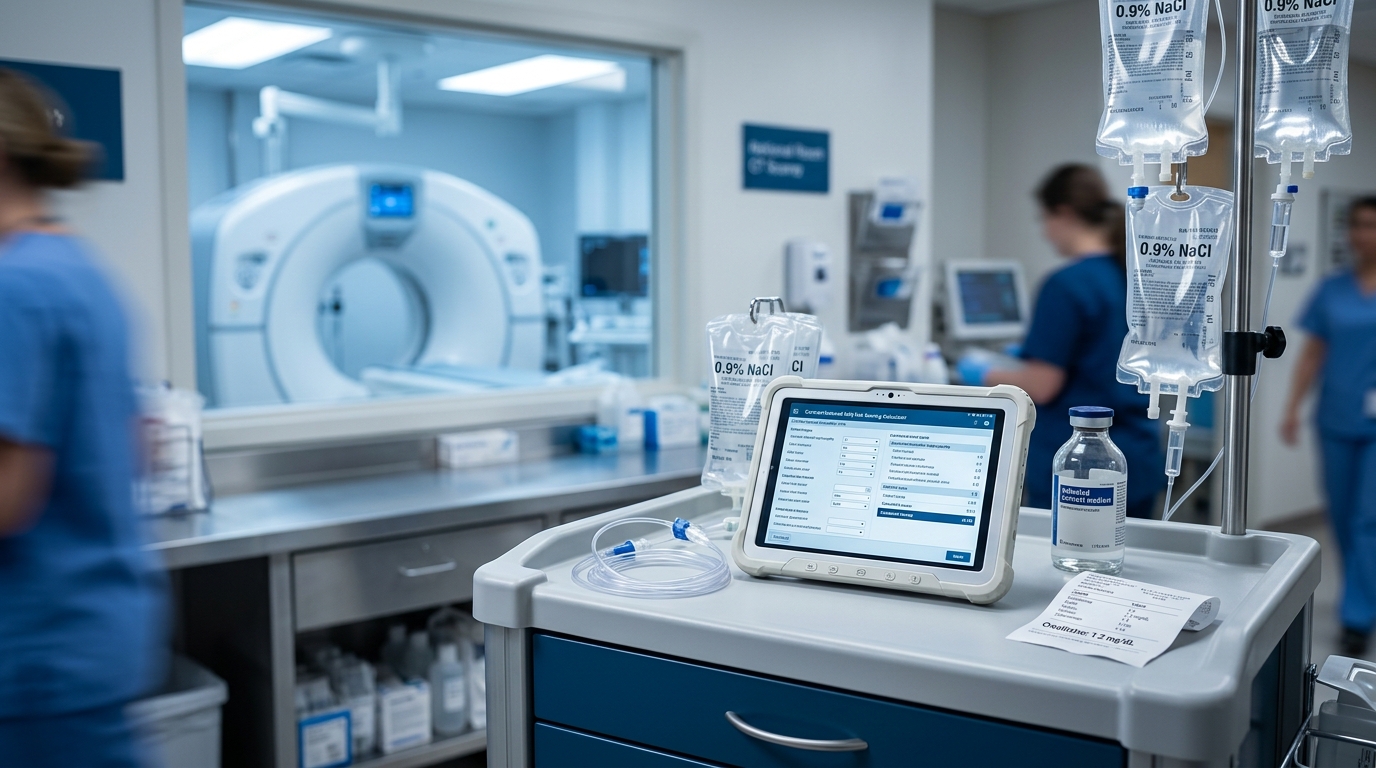
Redefining Contrast-Induced Nephropathy
The risk of contrast-induced nephropathy has been significantly overstated by historical observational studies that failed to account for the background rate of AKI in hospitalized patients undergoing imaging. Modern evidence has reframed the conversation around contrast-associated AKI — distinguishing true contrast nephrotoxicity from the AKI that would have occurred regardless of contrast exposure. For the radiologist, nephrologist, cardiologist, or hospitalist making decisions about contrast-enhanced imaging in patients with reduced renal function, understanding the current evidence allows a more balanced risk-benefit assessment that avoids both unnecessary contrast avoidance and preventable kidney injury.
Post-contrast acute kidney injury (PC-AKI) is defined as a serum creatinine increase of 0.3 mg/dL or more, or 50% or more increase from baseline, within 48-72 hours[2] of intravascular iodinated contrast administration. However, large propensity-matched studies comparing contrast-exposed to non-contrast-exposed patients have challenged the causality of contrast in AKI. The landmark study by McDonald et al. (2013, Radiology, n=12,508) found no significant difference in AKI rates between contrast-enhanced and unenhanced CT groups (6.8% versus 8.4%, p=0.11)[4]. A meta-analysis of 28 studies by Aycock et al. (2018) confirmed no increased AKI risk with IV contrast in patients with eGFR above 30 mL/min (OR 0.94, 95% CI 0.83-1.07)[3]. The true risk of contrast-induced nephropathy (CIN), as distinct from coincidental AKI in ill patients, is likely limited to high-risk populations receiving intra-arterial contrast.
Risk Stratification
The ACR Committee on Drugs and Contrast Media (2024 Manual) and the ESUR Contrast Media Safety Committee guidelines stratify risk primarily by eGFR and contrast route. For IV contrast (CT), the eGFR threshold warranting prophylaxis has been lowered to below 30 mL/min, with eGFR 30-44 mL/min considered low risk for IV contrast. For intra-arterial contrast with first-pass renal exposure (cardiac catheterization, aortography), the threshold remains eGFR below 45 mL/min. The Mehran risk score for percutaneous coronary intervention remains useful, incorporating hypotension, IABP use, heart failure, age above 75, anemia, diabetes, contrast volume, and eGFR, with scores above 16 predicting PC-AKI rates of 57% and dialysis rates of 12.6%[5].
Volume Hydration: The Cornerstone of Prevention
Isotonic saline hydration remains the primary preventive strategy for patients at risk. The standard regimen is 0.9% NaCl at 1-1.5 mL/kg/hr for 6-12 hours before and 6-12 hours after contrast exposure. The PRESERVE trial (n=5,177) demonstrated no superiority of sodium bicarbonate over normal saline (4.4% versus 4.7% PC-AKI, p=0.70) and no benefit of oral N-acetylcysteine over placebo (4.6% versus 4.5%, p=0.93)[1], definitively ending the routine use of both interventions. The AMACING trial found that in patients with eGFR 30-59 mL/min receiving IV contrast, prophylactic hydration did not reduce PC-AKI compared to no hydration (2.7% versus 2.6%, p=0.47)[2], supporting omission of prophylaxis for IV contrast when eGFR is above 30 mL/min.
Contrast Volume and Agent Selection
Minimizing contrast volume is critical in high-risk patients. The contrast volume-to-eGFR ratio (V/eGFR) predicts CIN risk: a ratio below 2.0 is associated with AKI rates below 3%, while ratios above 3.0 increase risk to 15-20%[7] in PCI populations. Iso-osmolar contrast (iodixanol, 290 mOsm/kg) was historically preferred based on the NEPHRIC trial (2003) showing lower CIN versus low-osmolar LOHCM (3% versus 26% in CKD patients undergoing angiography)[6]. However, subsequent meta-analyses including the ACT trial found no consistent advantage of iodixanol over other low-osmolar agents (iohexol, iopamidol, ioversol) for IV contrast administration, and current ACR guidelines do not preferentially recommend iso-osmolar agents.
Practical Decision Algorithm
For IV contrast (CT): check eGFR only if clinical suspicion of kidney disease exists (AKI, CKD, diabetes with proteinuria, solitary kidney). If eGFR is above 30 mL/min, proceed without prophylaxis. If eGFR is below 30 mL/min, provide isotonic saline 1 mL/kg/hr for 6-12 hours before and after. Withhold metformin only if eGFR is below 30 mL/min or if acute illness may impair renal function. For intra-arterial contrast: if eGFR is below 45 mL/min, provide IV hydration, minimize contrast volume (V/eGFR ratio below 2.0), and avoid concurrent nephrotoxins (NSAIDs, aminoglycosides) for 48 hours. Patients with diabetic kidney disease require particularly careful risk assessment. Post-procedure creatinine monitoring at 48-72 hours is recommended only for patients with eGFR below 30 mL/min or those who received large intra-arterial contrast volumes. The prior practice of holding contrast-enhanced studies solely due to CIN fear is no longer supported and may delay critical diagnoses.
When to Withhold Contrast — And When Not To
The most clinically important message from the modern contrast nephropathy literature is that contrast-enhanced imaging should not be reflexively withheld from patients with reduced renal function when the diagnostic information is clinically necessary. The historical fear of contrast nephrotoxicity — driven by observational studies that did not account for the background rate of AKI in sick patients undergoing imaging — led to widespread contrast avoidance that delayed diagnoses and denied patients indicated imaging studies. The current evidence supports a more balanced approach: for patients with eGFR above 30, the risk of clinically significant contrast-associated AKI with modern low-osmolar and iso-osmolar contrast agents is low, and the benefit of the diagnostic information usually outweighs the risk. For patients with eGFR below 30, the risk is real but manageable with pre-procedural isotonic crystalloid hydration, contrast volume minimization, and avoidance of repeat contrast exposure within 48-72 hours.
Limitations and What We Still Do Not Know
The reassuring data on contrast-associated AKI come primarily from studies using modern contrast agents and intravenous administration — the risk profile for intra-arterial contrast (catheterization, interventional radiology) is likely higher due to the concentrated arterial delivery to the kidneys, though the magnitude of this difference is debated. Whether metformin truly needs to be held before contrast administration in patients with normal renal function — a practice so deeply embedded in institutional protocols that it persists despite the absence of supporting evidence — remains a source of unnecessary treatment delay and patient confusion. And the interaction between contrast exposure and other nephrotoxic insults (NSAIDs, aminoglycosides, hemodynamic instability) in critically ill patients adds complexity that no single study has adequately addressed.
References
- Sodium Bicarbonate and N-Acetylcysteine for the Prevention of Contrast-Induced Nephropathy PubMed 29084567
- Prophylactic hydration to protect renal function from intravascular iodinated contrast material in patients at high risk of contrast-induced nephropathy (AMACING): a prospective, randomised, phase 3, controlled, open-label, non-inferiority trial PubMed 28471533
- Acute Kidney Injury after Computed Tomography: A Meta-analysis PubMed 28811122
- Frequency of acute kidney injury following intravenous contrast medium administration: a systematic review and meta-analysis PubMed 23360742
- A simple risk score for prediction of contrast-induced nephropathy after percutaneous coronary intervention: development and initial validation PubMed 15276092
- Nephrotoxic effects in high-risk patients undergoing angiography PubMed 12517460
- A simple contrast medium volume/GFR ratio to predict contrast-induced nephropathy after primary percutaneous coronary intervention PubMed 21296318
Frequently Asked Questions
Is IV contrast safe for patients with eGFR above 30?
Does N-acetylcysteine or sodium bicarbonate prevent contrast nephropathy?
What eGFR threshold requires prophylaxis before IV contrast?
What contrast volume-to-eGFR ratio predicts nephropathy risk?
When should metformin be held for contrast administration?
Is iso-osmolar contrast safer than low-osmolar contrast for CT?
Explore This Topic in Ailva
Ailva is a free clinical intelligence platform for NPI-verified US physicians. Get evidence-based answers with verified citations from 16M+ indexed papers — plus free CME credits.
Founder of Ailva.ai | Former Director of Research and Author of 200+ Medically Reviewed Articles | Editor-in-Chief of EudaLife Magazine