Concussion Management: Return-to-Play Protocols and Persistent Symptoms
 Sam Anderson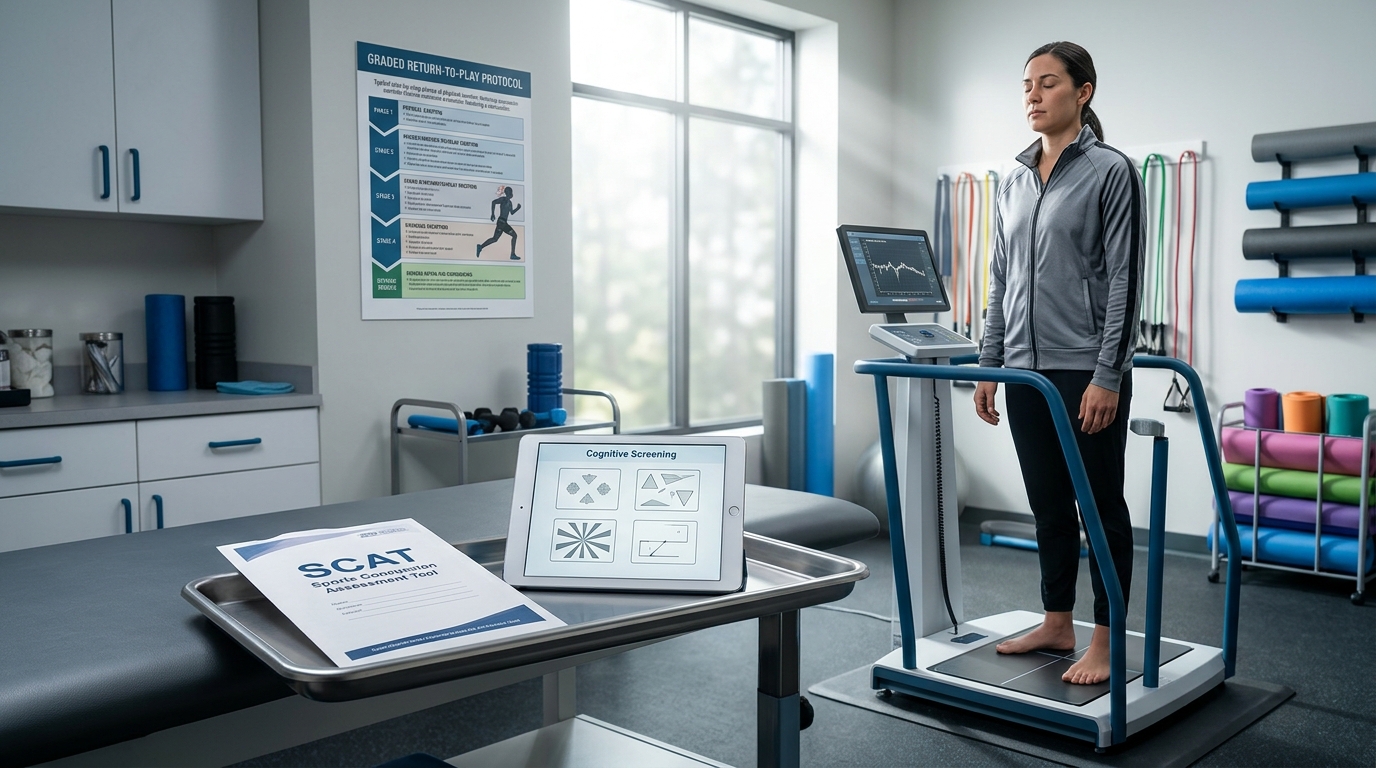
Acute Assessment and Diagnosis
Concussion management has evolved from a period of rest followed by gradual return to play into a structured, symptom-driven protocol that integrates cognitive and physical rehabilitation. For the sports medicine physician, emergency medicine physician, neurologist, or primary care provider, the clinical challenge extends beyond acute diagnosis to managing the subset of patients who develop persistent post-concussive symptoms — a complication that can significantly impact academic performance, employment, and quality of life for weeks to months after the initial injury.
The Sport Concussion Assessment Tool 6 (SCAT6), updated with the 2023 Amsterdam Consensus Statement, provides standardized sideline and office-based evaluation. Diagnosis is clinical, based on a mechanism of injury capable of transmitting force to the brain plus one or more of: symptoms (headache, dizziness, confusion, feeling in a fog), physical signs (loss of consciousness in 10%, amnesia in 25%, balance disturbance), cognitive impairment, or behavioral changes. No single biomarker or imaging modality confirms concussion. Head CT is indicated only for structural injury concerns per the Canadian CT Head Rule (GCS below 15 at 2 hours, suspected skull fracture, 2 or more episodes of vomiting, age above 65). Blood biomarkers (GFAP and UCH-L1) are FDA-cleared to aid in CT decision-making, with a sensitivity of 97.6% and NPV of 99.6% for intracranial lesions on CT[3].
Initial Management: Active Recovery
The Amsterdam Consensus marks a paradigm shift from strict cognitive and physical rest to active recovery. The 2019 RCT by Leddy et al. demonstrated that early aerobic exercise (sub-symptom threshold, starting within 48 hours) reduced median recovery time from 17 to 13 days compared to stretching control (p=0.009)[1]. Current recommendations include 24-48 hours of relative rest followed by gradual introduction of light aerobic exercise (walking, stationary cycling at 50-60% maximum heart rate) that does not exacerbate symptoms. Screen time restriction beyond the first 48 hours is no longer recommended. Return to school with accommodations (reduced workload, exam deferrals, screen breaks) should begin as tolerated, typically within 2-3 days.
Graduated Return-to-Play Protocol
The 6-stage graduated return-to-play protocol requires minimum 24 hours at each stage before advancing: Stage 1 (symptom-limited activity), Stage 2 (light aerobic exercise, 70% max HR), Stage 3 (sport-specific exercise, no head impact), Stage 4 (non-contact training drills, progressive resistance), Stage 5 (full-contact practice after medical clearance), Stage 6 (return to competition). Each stage requires symptom tolerance for 24 hours before progression. Minimum timeline is 7 days from symptom resolution to full return. For children and adolescents, a more conservative approach is recommended: minimum 14 days from symptom resolution based on evidence of prolonged recovery (median 28 days versus 14 days in adults) from the 5P study[5] and PERC 5P validation cohort.
Persistent Post-Concussion Symptoms
Approximately 15-30% of concussed individuals experience persistent symptoms beyond 4 weeks[4] (previously termed post-concussion syndrome). Risk factors include female sex (OR 1.7), prior concussion history, pre-existing migraine or mood disorders, and early high symptom burden (PCSS score above 40 at initial evaluation). Cervicogenic headache and vestibulo-ocular dysfunction are treatable drivers of persistent symptoms and should be specifically evaluated. The Buffalo Concussion Treadmill Test (BCTT) identifies exercise intolerance and guides subsymptom threshold exercise prescription, which has an NNT of 3 for earlier recovery[6] in a randomized controlled trial of persistent symptoms.
Targeted Therapies for Persistent Symptoms
Treatment of persistent symptoms requires a phenotype-directed approach. For post-traumatic headache with migraine features, amitriptyline 10-50 mg at bedtime (NNT 5 at 12 weeks)[7] or topiramate 25-100 mg daily are first-line prophylactics. Vestibular rehabilitation therapy (VRT) improves vestibulo-ocular symptoms in 73% of patients at 8 weeks[2] (Alsalaheen et al. meta-analysis). Cervical spine manual therapy addresses cervicogenic contributions, with an RCT by Schneider et al. showing 73% medical clearance at 8 weeks versus 7% for rest alone[2]. For cognitive symptoms persisting beyond 3 months, neuropsychological testing guides cognitive rehabilitation strategies. CBT for post-concussion anxiety and depression reduces symptom burden (effect size 0.6-0.8). A multimodal clinic model integrating these specialties achieves full recovery in 85% of persistent symptom patients within 12 weeks.
Return-to-Learn Before Return-to-Play
For the school-age patient, cognitive recovery often matters more than athletic recovery. The return-to-learn protocol should begin before the return-to-play protocol, with graduated academic accommodations that match the student's symptom tolerance. Initial accommodations may include reduced screen time, shortened school days, extra time for assignments, and quiet test-taking environments. As symptoms improve, accommodations are systematically reduced. The return-to-play protocol — a minimum of five graduated steps from light aerobic exercise through full contact practice, each separated by at least 24 symptom-free hours — should not begin until the student has returned to full academic activities without symptom exacerbation. This sequencing reflects the clinical reality that cognitive recovery typically precedes physical recovery readiness, and that pushing athletic return before academic return is achieved inverts the priorities.
Limitations and Persistent Post-Concussive Symptoms
The majority of concussions resolve within 2-4 weeks, but a meaningful minority — estimated at 10-30% depending on the definition used — develop persistent post-concussive symptoms (PPCS) lasting weeks to months. The management of PPCS is less evidence-based than acute concussion management, with treatment directed at specific symptom clusters (vestibular rehabilitation for dizziness, cervical physical therapy for headache with neck involvement, graded aerobic exercise for exercise intolerance, and cognitive behavioral approaches for mood and sleep disturbance). The absence of a reliable biomarker for concussion severity or recovery trajectory means that clinical assessment — serial symptom inventories, cognitive testing, and balance evaluation — remains the primary tool for guiding return-to-activity decisions.
References
- Early Subthreshold Aerobic Exercise for Sport-Related Concussion: A Randomized Clinical Trial PubMed 30715132
- Cervicovestibular rehabilitation in sport-related concussion: a randomised controlled trial PubMed 24855132
- Clinical Evaluation of a Multimarker Assay for Traumatic Brain Injury in an Emergency Department Setting PubMed 29283934
- Consensus statement on concussion in sport: the 6th International Conference on Concussion in Sport-Amsterdam, October 2022 PubMed 37316208
- Predicting Persistent Postconcussive Problems in Pediatrics: A Clinical Risk Score Derived From the 5P Study PubMed 27515523
- The Buffalo Concussion Treadmill Test and Exercise Treatment for Concussion PubMed 31038020
- Amitriptyline for post-traumatic headache: a systematic review PubMed 20971127
Frequently Asked Questions
Does early aerobic exercise after concussion speed recovery?
What is the minimum return-to-play timeline for pediatric concussion?
When is head CT indicated after concussion?
What is the NNT for exercise therapy in persistent post-concussion symptoms?
How effective is cervical spine therapy for persistent concussion symptoms?
Is screen time restriction still recommended after concussion?
Explore This Topic in Ailva
Ailva is a free clinical intelligence platform for NPI-verified US physicians. Get evidence-based answers with verified citations from 16M+ indexed papers — plus free CME credits.
Founder of Ailva.ai | Former Director of Research and Author of 200+ Medically Reviewed Articles | Editor-in-Chief of EudaLife Magazine