Clostridioides difficile Infection: Fidaxomicin vs Vancomycin and FMT Evidence
 Sam Anderson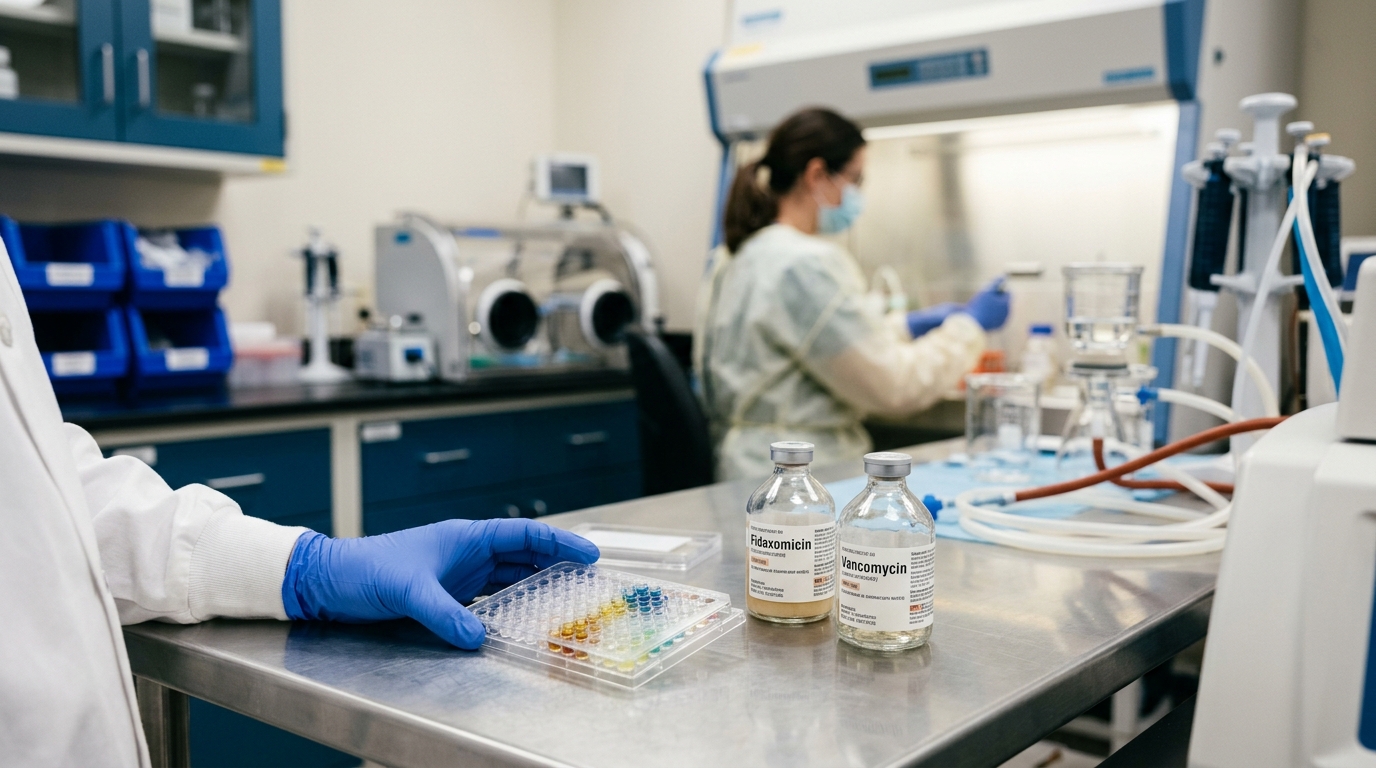
C. difficile Infection Epidemiology and Initial Assessment
C. difficile remains the most consequential complication of antibiotic therapy and the most common cause of healthcare-associated infectious diarrhea. For the hospitalist, infectious disease specialist, or gastroenterologist managing CDI, the treatment landscape has expanded substantially with fidaxomicin data favoring it over vancomycin for recurrence prevention, FDA-approved oral microbiota-based therapies for recurrent disease, and clearer clinical decision frameworks for selecting among these options. The fundamental clinical question has shifted from "how do we treat the acute episode?" to "how do we prevent the recurrence cycle that traps so many patients in repeated infections?"
Clostridioides difficile infection (CDI) remains the leading cause of healthcare-associated infectious diarrhea, affecting approximately 500,000 patients annually in the United States with 15,000-30,000 attributable deaths[1]. The updated 2024 IDSA/SHEA guidelines stratify CDI into initial episode, first recurrence, and multiply recurrent disease, each with distinct treatment algorithms. Diagnosis requires both compatible symptoms (three or more unformed stools in 24 hours) and a positive laboratory test, with nucleic acid amplification testing (NAAT) or a two-step algorithm (GDH/toxin EIA followed by NAAT arbitration) as preferred approaches.
Fidaxomicin vs Vancomycin: Head-to-Head Evidence
The MODIFY I and MODIFY II trials established fidaxomicin 200 mg twice daily as non-inferior to vancomycin 125 mg four times daily for clinical cure of initial CDI (92.1% vs 89.8%)[2]. Critically, fidaxomicin demonstrated a significantly lower recurrence rate at 25 days: 13.3% versus 27.0% in MODIFY I (p < 0.001)[3]. This recurrence benefit is attributed to fidaxomicin's narrow-spectrum activity that spares Bacteroides species and the anaerobic microbiome. The EXTEND trial further demonstrated that a pulsed fidaxomicin regimen (200 mg twice daily for days 1-5, then once daily on alternate days for days 7-25) reduced recurrence to 4% versus 16.6% with standard vancomycin[4].
Vancomycin Taper-Pulse Regimens for Recurrent CDI
For first recurrence of CDI, a vancomycin taper-pulse regimen remains an effective and cost-conscious option: 125 mg four times daily for 10-14 days, then twice daily for 7 days, then once daily for 7 days, then every 2-3 days for 2-8 weeks. This approach reduces recurrence to approximately 25% compared to 40-50% with a standard 10-day vancomycin course. The tapered dosing is thought to allow gradual microbiome recovery while suppressing residual spore germination.
Fecal Microbiota Transplantation and Live Biotherapeutics
FMT achieves cure rates of 80-90% for multiply recurrent CDI. The ECOSPOR III trial led to FDA approval of fecal microbiota spores, live (Vowst/SER-109), an oral formulation demonstrating 88% sustained clinical response versus 60% with placebo at 8 weeks for recurrent CDI after standard antibiotic treatment. RBX2660 (Rebyota), a rectally administered microbiota-based product, achieved treatment success in 70.6% versus 57.5% placebo in the PUNCH CD3 trial[5]. Both represent standardized alternatives to conventional donor-dependent FMT.
Clinical Decision Framework: Selecting the Right Approach
For initial non-severe CDI, fidaxomicin is preferred over vancomycin given superior recurrence prevention, though cost remains a consideration. Vancomycin taper-pulse is a reasonable alternative for first recurrence. For second or subsequent recurrence, FMT or FDA-approved live biotherapeutics should be offered following a course of standard antibiotic therapy. Bezlotoxumab, a monoclonal antibody against C. difficile toxin B (part of broader antimicrobial stewardship efforts), reduces recurrence by approximately 10 percentage points (absolute risk reduction)[6] when added to standard antibiotic therapy and is recommended for patients at high risk of recurrence (age over 65, immunocompromised, severe CDI).
References
- Burden of Clostridium difficile infection in the United States (Lessa et al. CDC)
- Fidaxomicin versus vancomycin for Clostridium difficile infection (MODIFY I / OPT-80-003)
- Fidaxomicin versus vancomycin for Clostridium difficile infection (MODIFY I / OPT-80-003)
- Extended-pulsed fidaxomicin versus vancomycin for Clostridium difficile infection in patients 60 years and older (EXTEND)
- RBX2660 microbiota-based live biotherapeutic for recurrent C. difficile (PUNCH CD3 related)
- Bezlotoxumab for Prevention of Recurrent Clostridium difficile Infection (MODIFY I and II)
Frequently Asked Questions
Does fidaxomicin reduce C. diff recurrence compared to vancomycin?
What is the efficacy of SER-109 (Vowst) for recurrent CDI?
When should FMT or live biotherapeutics be offered for C. diff?
What is the vancomycin taper-pulse regimen for recurrent CDI?
Is fidaxomicin preferred over vancomycin for initial C. diff infection?
Explore This Topic in Ailva
Ailva is a free clinical intelligence platform for NPI-verified US physicians. Get evidence-based answers with verified citations from 16M+ indexed papers — plus free CME credits.
Founder of Ailva.ai | Former Director of Research and Author of 200+ Medically Reviewed Articles | Editor-in-Chief of EudaLife Magazine